Accept a revised baby bath or early-learning toy quote only when it identifies what changed, preserves the agreed product configuration, and links approval to the correct sample and commercial terms. For a push walker, review changes affecting its rolling action; for a musical piano, review light and sound functions. Bath-toy revisions also need drainage and cleaning checks when construction changes. Judge quote revision discipline by whether you can reach a documented accept, conditional accept, or reject decision—not by how polished the quotation looks.

Which Product Fields Should Anchor the Revision Comparison?
| Pink elephant push walker — product reference BPF341031 | Recorded product: elephant push walker, pink. Recorded material: ABS. Packing: color box. Reference MOQ: 36 units. Units per carton: 12. Historical reference price: USD 5.89. |
|---|---|
| Musical piano with light — product reference BPF343816 | Recorded product: musical piano with light. Recorded material: ABS. Packing: color box. Reference MOQ: 120 units. Units per carton: 60. Historical reference price: USD 2.37. |
| Product configuration to establish before approval | Record the exact mechanism, component specification, color or variant, included accessories, sample identity and packing artwork revision. Use the sample review to establish details beyond the catalog description. |
| Commercial comparison basis | Request the current price, currency, quoted quantity, MOQ, packing quantity, delivery basis, payment terms, quote validity and delivery commitment. Identify every departure from the previous quote. |
What Should a Per-Product Quote Revision Worksheet Record?
Use one revision worksheet per product, with the specified target, supplier’s proposed value and observed evidence recorded separately.
For each changed field, capture four entries: previously approved value; proposed value; reason for change; and supporting observation or document reference. A supplier’s statement that the product is unchanged is useful, but it is not the same as a sample observation.
Under this recommended purchasing control, a revision without a recorded reason or responsible approver is incomplete for approval. Retain earlier quotes rather than overwriting them; supporting emails and samples can still provide valid evidence even when the revision log needs correction.
| Identity and revision | Record supplier name, exact product reference and variant, original quote number and date, previous revision, proposed revision number and issue date, and the buyer request that prompted it. |
|---|---|
| Specified target versus proposal | Compare mechanism, material or component specification, packing, price, MOQ, units per carton and delivery terms. Mark unchanged fields explicitly instead of leaving their status ambiguous. |
| Observation and evidence | Enter the sample identifier and review date, observed result, relevant photographs or function record, and the specification or document revision reviewed. Distinguish supplier declarations from buyer observations. |
| Change ownership | Name the requester, supplier contact responsible for the explanation, and buyer reviewer responsible for each affected area. |
| Decision and authorization | Record accept, conditional accept or reject; the scope authorized; the responsible approver’s name and role; and the decision date. |
| Conditions and closure | For each open condition, record the required action, owner, deadline, closure evidence, closure reviewer and closure date. Identify which quote revision becomes the purchasing baseline. |
Which Product Changes Need Renewed Sample Review?
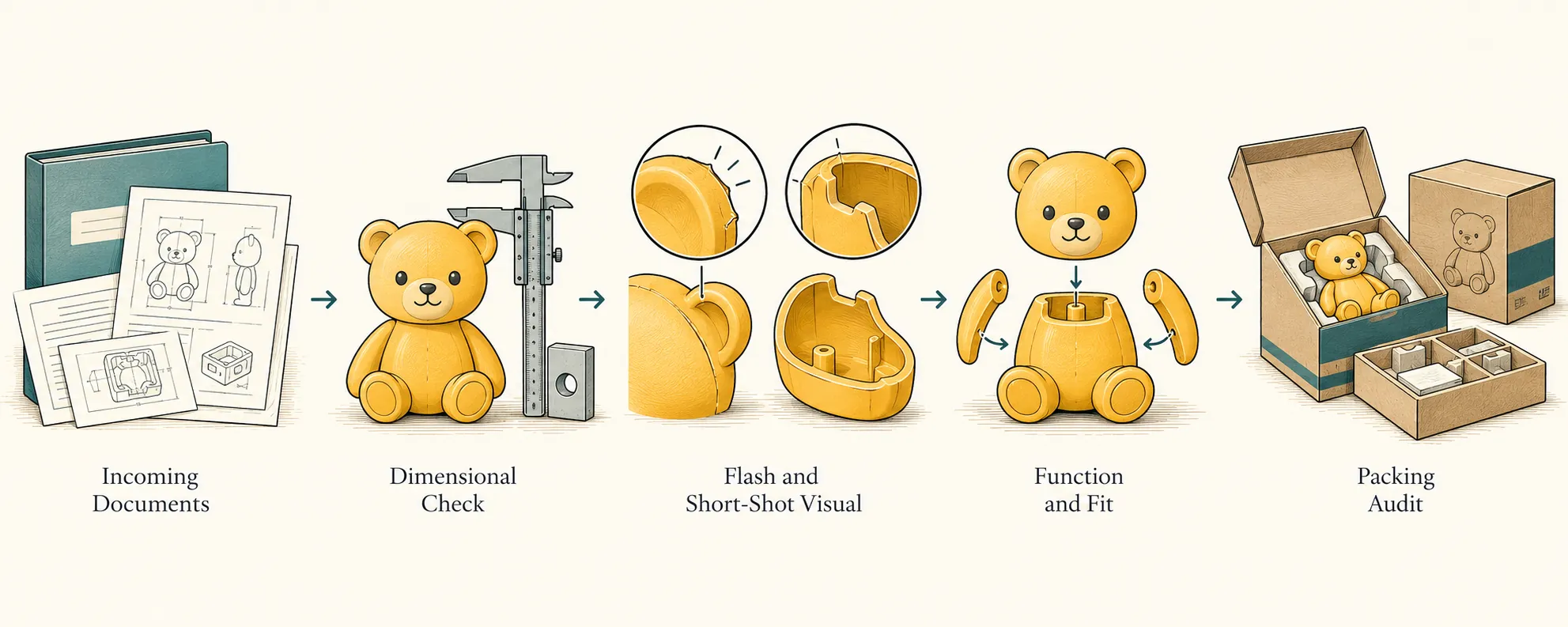
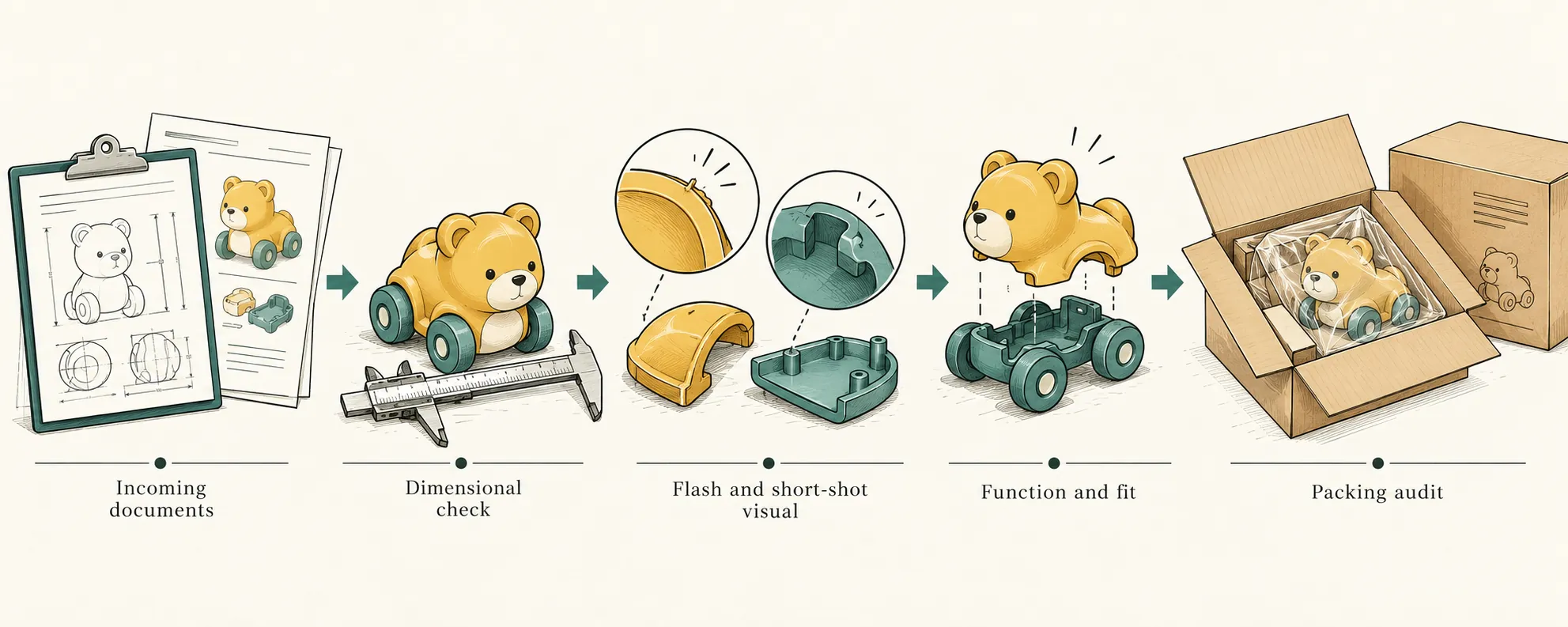
Require renewed sample review when a revision changes the mechanism, relevant construction, material specification or packing in a way that could affect the agreed product or presentation.
For the pink elephant push walker, ask whether the rolling mechanism, wheel or handle components, assembly method and included parts match the approved sample. Confirm the pink variant independently; a catalog color does not establish current inventory. A general ABS entry does not specify every component or the whole toy’s construction.
For the musical piano with light, compare the agreed key responses, sounds, light behavior, controls and power arrangement with the revised sample. Ask the supplier to identify any component substitution behind a price change. A shared product name does not establish an identical configuration.
For a bath toy, tie drainage and cleaning questions to the changed part: Does the revision alter openings, joints, internal cavities or access for cleaning? Which parts can be opened, drained and dried according to the proposed instructions? Request a demonstration on the revised sample and record what you actually observe. These are commercial sample checks, not substitutes for applicable safety testing.
Packing changes also deserve explicit review. Compare the box format, internal restraint, included instructions and artwork against the agreed target. A lower price that removes part of the agreed pack is a different offer, not a like-for-like reduction.
How Would the Same Cost-Reduction Request Be Evaluated?
| Push walker: price changes, agreed configuration stays the same | Compare the proposed price on the same quantity and delivery basis. Require an explicit statement that the approved pink variant, mechanism, agreed material specification, color box and packing quantity remain unchanged. Accept the commercial revision once the authorized buyer approves it and existing product approvals remain applicable. |
|---|---|
| Musical piano: lower price includes a changed light or sound component | Treat this as a configuration change. Conditionally accept further sample development only, with purchase release withheld until the revised function is reviewed, relevant documentation is assessed and the designated approver closes the condition. |
| Either product: MOQ or carton quantity changes | Assess the revised minimum separately from packing quantity and confirm the intended order quantity. The catalog reference MOQs are 36 units for the walker and 120 units for the piano; their carton quantities are 12 and 60 respectively. A carton quantity alone does not establish an order multiple. |
| Either product: revised quote and sample describe different configurations | Reject the submitted revision as a purchasing basis until the supplier reconciles the quote, specification and sample identity. Preserve any valid prior approvals; this decision does not by itself justify rejecting the supplier. |
What Must Be Closed Before Final Purchase Approval?
Close the exact-product sample, current commercial terms, age-evidence and destination-document checks before authorizing the purchase—not merely before filing the quotation.
For each of the two example products, request a current sample identifier and availability confirmation, then link the sample review to the proposed quote revision. Confirm quote validity and all changed commercial terms directly. The historical catalog entry is not a substitute for either check.
Request the proposed age grading and supporting evidence for the exact product configuration. Have the responsible reviewer assess its relevance to the intended market and use. For destination documentation, request the item-linked reports, declarations, labeling and instructions selected for review against the applicable requirements. Assess coverage against the tested construction; a new internal reference or batch does not automatically require a new test.
Route commercial changes to the authorized buyer, functional changes to the sample-development or technical reviewer, and age or destination-document questions to the responsible safety or compliance reviewer. One person may hold more than one role, but each approval should identify its scope.
Conditional acceptance must state what may proceed. Permission to develop a replacement sample is not permission to release a purchase order. Each condition needs an owner, deadline and closure evidence; the final approver records the closure date and approved revision.
When Should You Accept, Condition or Reject the Revision Process?
Accept the process when the supplier consistently identifies changes, explains their reasons and keeps quote, specification and sample references aligned; condition it when correctable controls remain open; reject it as a purchasing basis when unresolved contradictions prevent an informed approval.
Evaluate the revision trail, not just the newest PDF. Can the supplier reconstruct the previous offer, identify who requested a change, distinguish a price adjustment from a construction change, and acknowledge the buyer’s approval conditions? Those are concrete signs that the process can support the sourcing decision.
A well-maintained record supports traceability; it does not by itself reveal an undisclosed substitution or prove that production matches the approved sample. Keep the revision review connected to sample evaluation and procurement quality checks. The useful endpoint is a named approver, a dated decision, a clearly identified quote version and closed conditions—not another spreadsheet with an unexplained green cell.