Stop treating your baby toy sourcing project as a single factory's job. In a real development network, the entity that holds the tool, the entity that runs the press, the entity that signs the conformity paperwork, and the entity that books the container are often four different parties—and your cost, MOQ, and margin all move depending on which one you negotiate with. Build a responsibility-and-evidence map for your specific SKU before you accept a quoted MOQ or a quoted unit price, because a low quote usually means someone else's cost is sitting outside the frame.
This page gives you that map: the roles to assign, the documents to demand per role, and the trade-offs between concentrating volume in one factory and splitting it across a network. No supplier is scored here; the criteria work on any candidate you shortlist in Chenghai, Shantou, Dongguan, or Yiwu.
What buyers should decide before comparing quotes
- MOQ is a commercial term negotiated per factory and per SKU, shaped by resin grade, mold ownership, decoration steps, packaging, and run quantity—so a single "industry MOQ" figure is not a real benchmark to shop against.
- Incoterms allocate trade responsibility but certify nothing: FOB, CIF, or DDP do not replace CE, a Children's Product Certificate, UKCA, or any market-specific test evidence.
- If one SKU is produced across more than one factory or lot, that split has to be visible in the order, the carton code, and the compliance file, or traceability breaks at exactly the moment you need it.
- Under EU toy rules, conformity assessment stays the manufacturer's obligation; importers must verify it was carried out, and distributors carry due-care duties—so ask which party is legally the manufacturer on your SKU.
- Cheap development usually shows up later as tooling you do not own, a certificate that does not match your lot, or a September color change that missed the vessel.

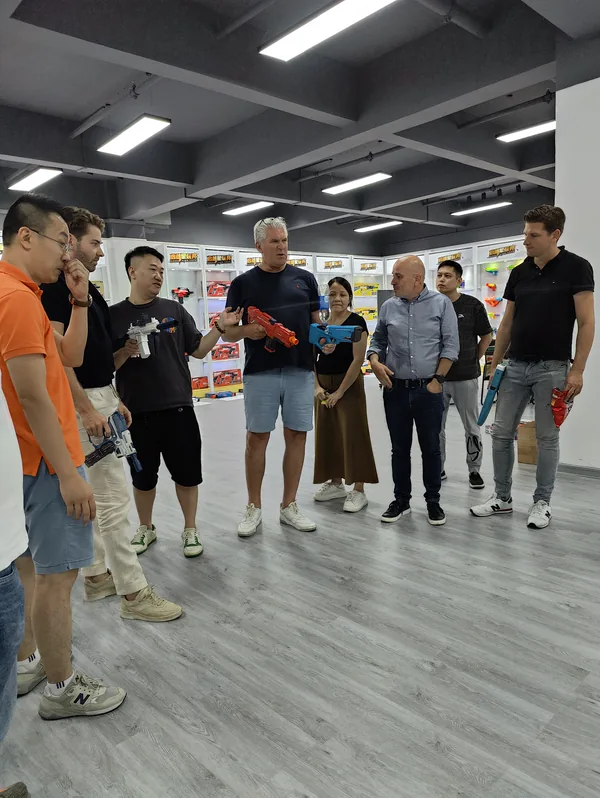
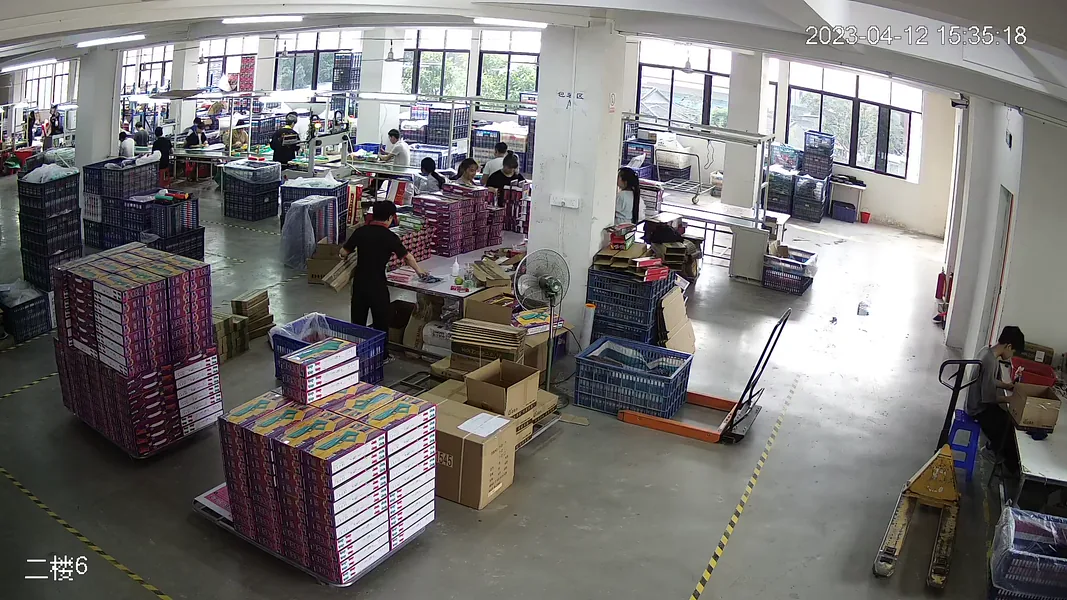
Which party actually owns each step in your baby toy project?
The first deliverable in baby toy sourcing is not a price list—it is a named responsibility table. List each step: concept and age grading, industrial design, tool design and ownership, molding, decoration, assembly, electronics and battery compartment design, packaging artwork, testing, conformity documentation, inspection, and freight booking. Then write the party name next to each line. Blank cells are your real risk register, not the quote.
According to the EU Toy Safety Directive 2009/48/EC, conformity assessment remains the obligation of the manufacturer alone, because the manufacturer holds detailed design and production knowledge. That single sentence breaks the common assumption that a trading partner or an assembly workshop can "handle compliance" for you. If an entity places the toy under its own name or trademark, or modifies it in a way that may affect compliance, it takes on manufacturer obligations.
Your network map therefore needs a legal column, not just an operational one. Ask each candidate which entity will be named as manufacturer on the technical documentation, and who signs the EU Declaration of Conformity. Importers bringing third-country toys into the EU must verify compliance and that assessment procedures were carried out; distributors still owe due care, and repacking or storage can affect it. None of that is delegated to the factory floor by default.
The General Product Safety Regulation (EU) 2023/988 adds a second layer that is easy to miss. It is a horizontal framework separate from toy-specific legislation, and it reaches distance selling and online marketplace providers. It also pushes risk assessment back to the design stage and covers connected-product concerns for toys with electronics or apps. If your baby toy has a speaker, a Bluetooth module, or a companion app, design-stage evidence belongs in the same folder as the mechanical test report.
What evidence should replace a supplier's assurance?
Assurance is cheap. Records are not. For each SKU, ask for the file that ties a test result to a product configuration, an age grade, and a standard edition. A report that does not identify the configuration or the edition is not evidence for your SKU—it is evidence for someone else's.
In the US market, children's toys generally require testing at a CPSC-accepted laboratory and a Children's Product Certificate, according to CPSC business guidance. The CPC is product-specific and identifies the applicable rules and responsible parties; it is not a blanket factory certificate, and it should not be presented as one. Tracking labels matter here too: permanent identification supports product identification and must be reviewed alongside packaging and lot control.
Age grading and small-part risk are linked and must be assessed for the actual configuration, including assemblies, detachable accessories, and packaging components. Do not infer infant suitability from a catalog category, a material name like "food-grade," or a product photo. You need SKU-specific age and intended-use evidence, or you are guessing on the one attribute that drives recalls.
Small parts discipline is also a design habit, not a checklist item. If a rattle has a detachable cap, the small-parts question arrives with the drawing, not with the test lab booking.
Where the money actually goes: MOQ, tooling, and unit price
Unit prices are only comparable when the assumptions behind them match. Three variables dominate, and all three are negotiable in different places.
Tooling ownership decides your switching cost. If the mold is bought and held by the factory, your second-source option is theoretical. If you pay for the tool, ask where it is stored, what the tool number is, and what happens to it if you move the job. A tool number and revision label are also the cheapest defense against the classic problem of a show sample—often a hand-finished hero unit from a trade fair—being treated as the production standard.
Run quantity decides the amortization. A lower MOQ is usually not a discount on the same cost base; it is a smaller spread over setup, color change, and packaging minimums. That is why the same molded part can carry wildly different MOQ positions at two factories with different press schedules. Processing melt temperature is also resin-grade-specific—a generic setting across ABS, PP, PC, or nylon can degrade material or cause incomplete filling, which is a quality cost that appears after the PO, not in it.
Decoration and packaging set the floor. Pad printing, spray masking, embroidery, insert cards, and retail-ready cartons each carry their own minimums. If your margin model only accounts for the molded part, the packaging minimum is where the plan breaks.
Network models: what you buy and what you carry
| Single integrated factory | One party owns molding, assembly, testing coordination, and documents. Advantage: fewer handoffs, single accountability line. Cost: pricing power sits with that factory, and a capacity crunch or a tool problem hits your whole launch. |
|---|---|
| Factory plus separate tool shop | Mold built and maintained by a specialist, production run elsewhere. Advantage: clearer tool ownership and often better tool quality. Cost: you manage the interface, and revision control must be enforced by you, not assumed. |
| Multi-factory split by component | Plastic parts, plush or fabric elements, and electronics produced by different specialists. Advantage: each step uses the right process. Cost: the split must appear in the order, carton code, and compliance evidence, or traceability fails. |
| Sourcing agent or trading partner | An intermediary coordinates factories and inspections. Advantage: lower upfront commitment and local language leverage. Cost: the agent's diligence becomes your quality system, and the legal manufacturer question usually stays unresolved. |
| Category specialist in the origin cluster | A factory focused on one material or product class, often inside a dense supplier cluster. Advantage: deeper process knowledge and a local subcontracting network. Cost: the network behind it is invisible unless you ask who actually runs each step. |
Network model cost and risk trade-offs
| MOQ exposure | Lowest when you accept stock configurations and one factory's existing tooling; highest when you fund a new tool plus custom packaging across separate suppliers. |
|---|---|
| Tooling cost and ownership | Paying for the tool raises upfront cost and improves your exit position. Letting the factory amortize it lowers entry cost and weakens your leverage on the second order. |
| Certification and document work | Consolidating documentation with one responsible party is cheaper to administer. Splitting production across parties increases the number of files you must reconcile to the lot. |
| Lead time under peak pressure | Written freeze dates, change-over hours, and press assignment reduce risk. Verbal promises about quick changes are the named failure mode when September capacity tightens. |
| Commercial term clarity | State the Incoterms version and the named place as actually booked. A bare "FOB" with no city is an argument waiting for a container. |
Why Chenghai, Shantou, Dongguan, and Yiwu are not interchangeable
China's toy supply base is a set of clusters, not one address. Chenghai, inside Shantou in Guangdong, is the recognized plastics and molded-toy concentration, with a deep local network for tooling, molding, decoration, and packaging. Shantou as a port city also matters commercially: the named place on your Incoterms line is often Shantou or Shenzhen, and which one is booked changes your inland cost and cut-off timing.
Dongguan, including Chashan, built its reputation on plush and soft-goods manufacturing, with a long subcontracting tradition and a dense surrounding supplier base for fabric, filling, and accessories. If your product is a plush or fabric-heavy baby item, the process knowledge sits there rather than in a plastics cluster.
Yiwu is a trading and small-batch market hub rather than a heavy manufacturing cluster. It suits promotional quantities, accessory items, and rapid assortment building, and it is a poor fit for a certified, tooled, molded baby product where you need revision control and lot-level evidence.
The sourcing decision follows from product physics. A silicone teether, a molded stacking cup, and a plush comforter do not belong in the same cluster conversation, and pretending they do is how buyers end up with an unexpected MOQ and an unowned tool.
How to verify a Chinese supplier in this network, step by step
Start with the legal question. Ask which entity will be named as manufacturer on the technical documentation and who signs the conformity documents. Under EU rules, conformity assessment is the manufacturer's obligation, so an answer that dodges this question is itself a finding.
Then reconcile documents to the lot. A certificate that does not match the market, the lot, or the test scope is not paperwork—it is a placeholder. Map each market to the file that actually covers it, and check that the report identifies the product configuration, age grade, and the standard edition cited. Read the current regulation before quoting an edition number to your team.
Next, inspect the tool and revision trail. Ask for the tool number and the current revision, and confirm that the production standard is the revision card, not a trade-fair sample or a photo. This is the single cheapest check available to a buyer, and it prevents an entire class of color, fit, and finish disputes.
Then put the peak-season plan in writing. Freeze dates, change-over hours, and which job is on which press belong in the schedule, not in a chat message. A verbal quick change during peak season has missed more vessels than tooling problems ever have.
Finally, agree the inspection plan on the purchase order. Do not accept a defect number quoted from a catalog page. On the floor, the workable sequence is: isolate the failed lot, record the defect class, and release only after rework, with the acceptance criteria taken from the inspection plan you both signed.
For electronics, sequence the safety review before the feature review. Button-cell and battery-compartment toys are a compartment-and-warning problem: check screw closure, tool access, and the warning content before discussing how the toy plays. A compartment that opens with fingernails does not ship.
Concentrate volume or split it? A margin view
Concentrating volume in one factory buys you price leverage, simpler documentation, and one throat to choke when something goes wrong. It also hands that factory pricing power on your second order, and a single capacity problem becomes a launch problem. For a first certified SKU in a narrow category, concentration is usually the better margin decision because your fixed costs stay in one place.
Splitting across specialists buys process fit and resilience, and it costs you administrative overhead: more files to reconcile, more interfaces to manage, more places for a revision to drift. Split when the product genuinely needs different processes—molded shell plus plush cover plus electronics—and keep one party accountable for the final assembled conformity picture.
The middle path that most experienced buyers take: own the tool, concentrate the molded production, and use a second qualified source only for components where the process genuinely differs. That keeps your MOQ conversation in one room while preserving an exit.
If your product line includes wooden elements, the same logic applies with a different process base; wooden baby toys are a separate supplier conversation from molded plastic, and mixing the two into one quote usually produces a misleading average.
Buyer questions on network evaluation
Do I need to audit every factory in my development network?
No, and no regulation requires it. Under EU toy rules, conformity assessment is the manufacturer's obligation, so your leverage is asking which entity holds that role and requiring the technical documentation to match your SKU, lot, and market. Audit the party that carries the legal and quality risk, and reconcile documents from the rest.
Can one certificate cover both the EU and US versions of my baby toy?
No. The EU path runs through the Toy Safety Directive with CE marking and an EU Declaration of Conformity, while the US path generally requires testing at a CPSC-accepted laboratory and a product-specific Children's Product Certificate. A document that does not match the market, lot, or test scope does not cover your shipment, so map each destination to its own file.
What MOQ should I expect for a custom molded baby toy?
MOQ is factory- and SKU-specific, affected by resin grade, mold ownership, decoration steps, packaging minimums, and run quantity, so there is no single industry number to benchmark against. Ask each candidate to break the MOQ down by tooling, color change, and packaging, then compare the assumptions rather than the headline figure.
Is a trade-fair sample a fair production reference?
No. Booth samples are frequently hand-finished hero units, and lighting and handling make them look better than a production run will. The production standard should be a labeled tool number and revision card, and you should refuse photos or fair samples as the acceptance reference.
How do I protect margin if I split production across suppliers?
Make the split visible. If one SKU is produced across more than one factory or lot, the split should appear in the order, the carton code, and the compliance evidence. Then hold one party accountable for the assembled conformity picture, and write freeze dates and change-over hours into the schedule so peak-season changes cannot be made verbally.
Does FOB pricing include any compliance assurance?
No. Incoterms such as FOB, CIF, and DDP allocate trade responsibilities including cost and risk transfer, but they certify nothing and do not replace CE, a CPC, UKCA, or market-specific test evidence. State the Incoterms version and the named place as actually booked, for example Shantou or Shenzhen, so freight responsibility is unambiguous.
Sources
- 东莞茶山,一座小镇的“玩具总动员”
- Baby Toys Manufacturer — Safe, Soft & Developmentally-Rich Toys for Little Ones
- Everything You Need to Know About OEM Toy Production for Your Business
- From Homegrown Craft to Scalable Impact: Jhansi’s Soft Toy Industry and the Blueprint for Distributed Manufacturing
Related Products & Categories
Request a quote or a factory audit
Bring your SKU, age grade, target market, and annual volume. We will map the responsibilities across the development network, tell you which evidence we can supply against your lot, and quote on the assumptions we actually use rather than a headline MOQ.
If you want the checks done before commitment, request a factory audit and a sample evaluation against your revision card. Send the spec and we will respond with the questions we still need answered—that list is usually more useful than the price.